Description
Containers as symbol of worldwide trade : as of recent estimates, container shipping accounts for about 60% to 70% of the total value of global trade. It is clear that a substantial portion of the products we use daily is transported by sea. Many everyday consumer goods, including electronics, clothing, furniture, and food products, are shipped internationally. A single container ship can emit as much CO2 as 50 million cars over a year due to its high capacity and long-distance travel.
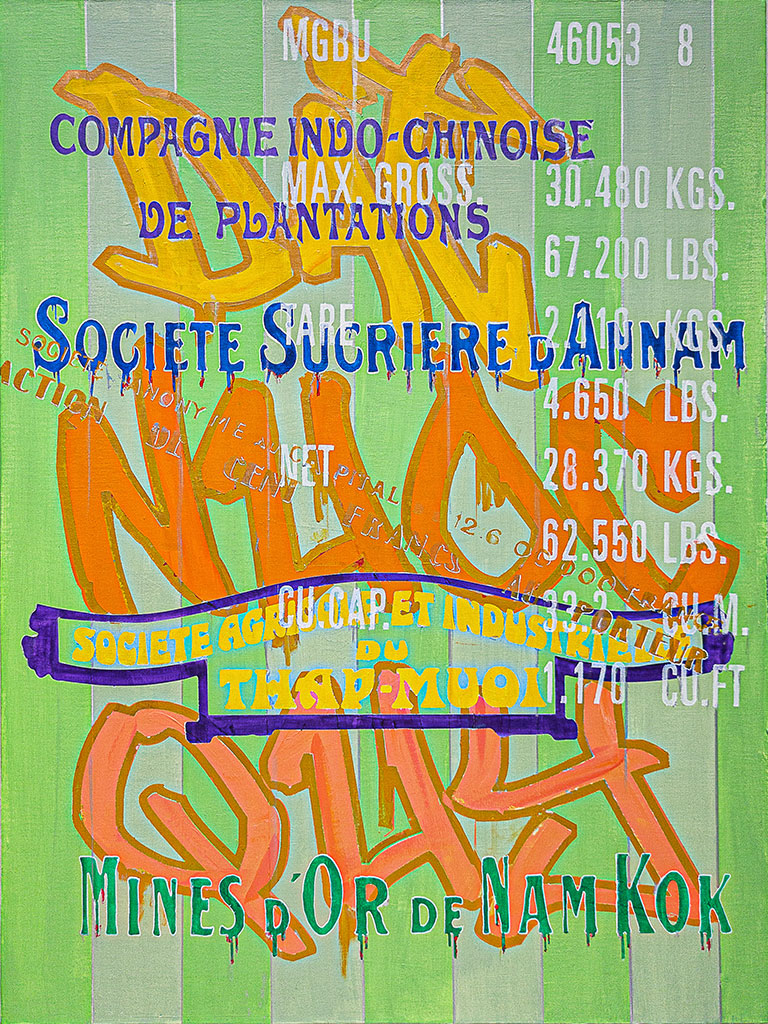
The Vietnam War was a critical turning point for the large-scale adoption of shipping containers. The U.S. military initially relied heavily on its small CONEX boxes to manage the immense logistical demands of the conflict. This shift to containerization proved far more efficient than traditional “break-bulk” cargo handling. Containers drastically cut ship turnaround times and improved supply security at Vietnamese ports. The military’s successful implementation served as a vital testing ground for the new technology. The war thus directly accelerated the development of the ISO container system that defines global trade today.
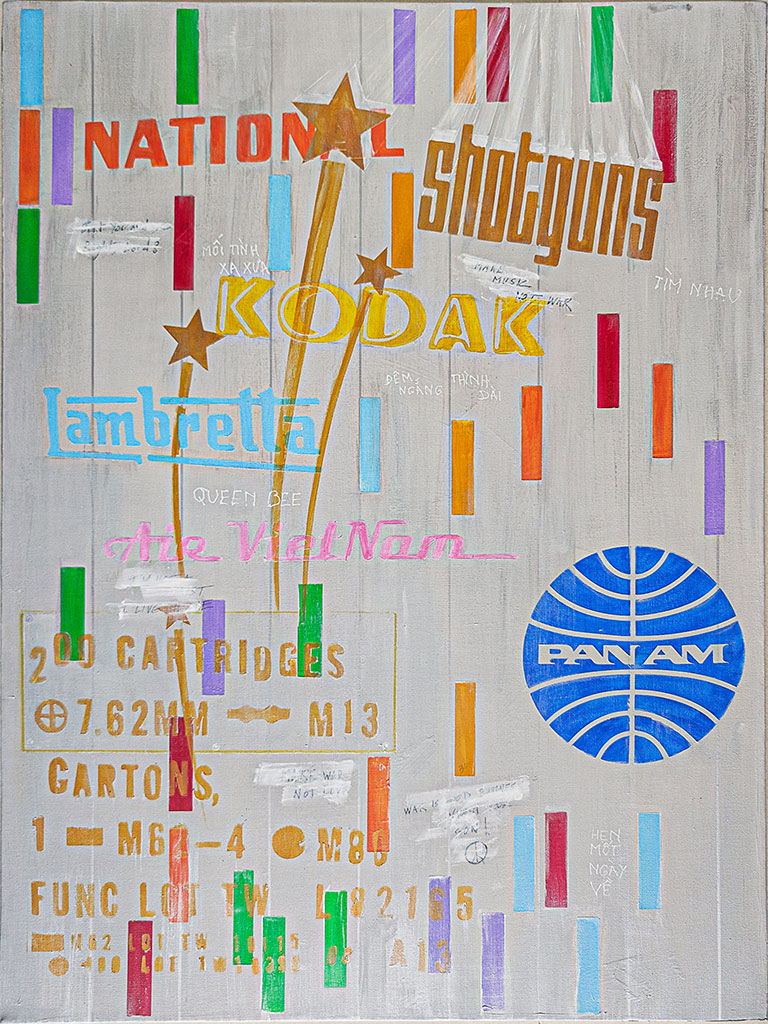
The painting shows different brands—American, European, and Asian—including the first international Vietnamese brand, Air Vietnam. Some graffiti words are those of hand-written by the GIs on their helmets, while other words are also taken from Vietnamese pop songs from the label ‘Shotgun,’ which was the best known at that time.