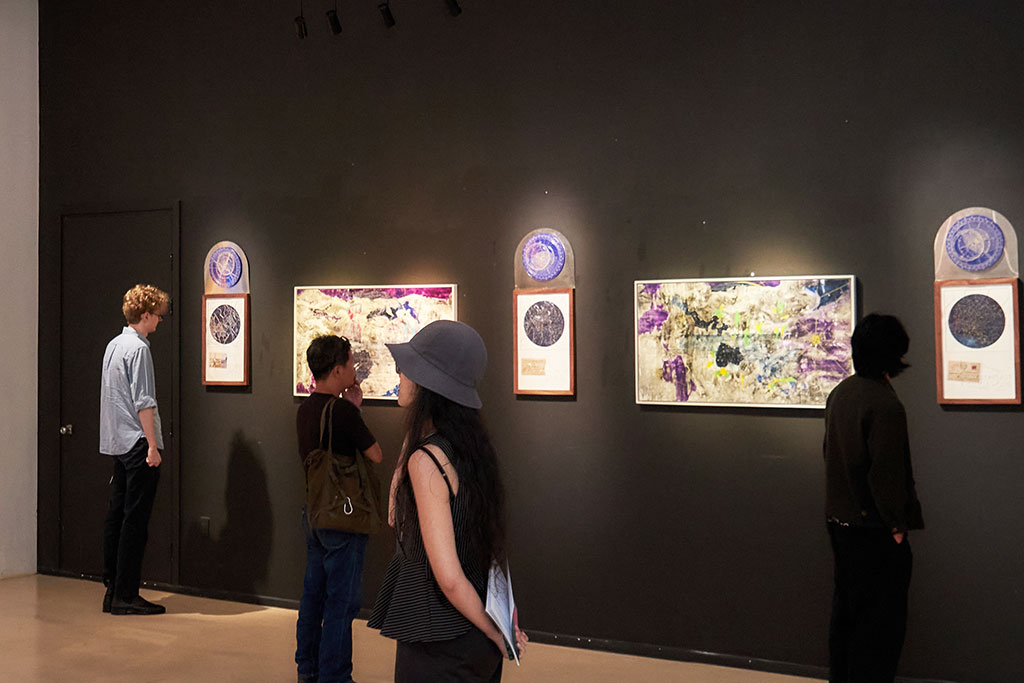
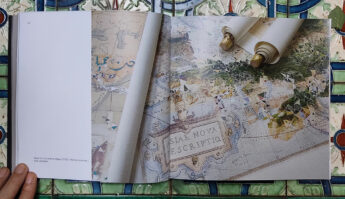
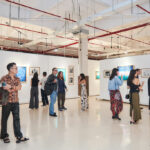
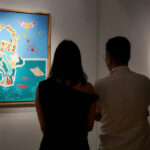
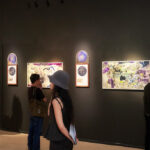
Seas of Silk, Mix-Media Exhibition at Lotus Gallery
“Lotus Gallery is pleased to present Seas of Silk, a solo exhibition by artist Quang deLam.
Drawing inspiration from the Silk Road – not merely a vital trade route but a conduit for the exchange of ideas, religions, and cultures across borders – Quang deLam, through the lens of contemporary art, journeys back through history to reimagine this complex network from a unique perspective.
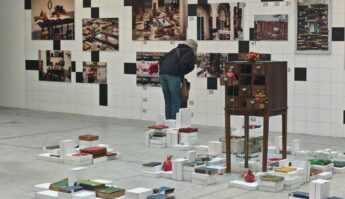
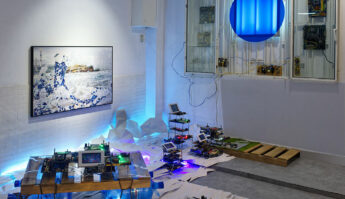
Through a multidisciplinary practice that spans painting, photography, and installation, the artist does not simply reconstruct the past, but refracts, and transforms it into a modern-day cabinet of curiosities – a space where memory, imagination, and curiosity converge in dialogue. Like a contemporary Wunderkammer, the exhibition invites viewers into a realm of open-ended associations – where history is not only seen, but questioned and reexamined.”
Curatorial text by Dr Bridget Tracy Tan, Senior Director, Institute of Southeast Asian Arts (ISEAA) and Art Galleries (Singapore)
A path and a destination: worlds wedded in the string of destiny
“About 5500 years ago, Eurasian steppe nomads domesticated the horse … The Bactrian camel soon followed the same fate and was burdened with the bulk of transportation between Eastern and Western civilizations … People who were utilizing these animals were naturally contributing to the formation of roads in Central Asia. The archaeological evidence suggests that the road network had been functioning as early as the third millennium BCE, with further intensification in the second millennium BCE…”
Broadly speaking, the concept of the ‘Silk route’ has been largely used to describe a specific network of trading exchanges thought to have formally originated around 100 BC. The Encyclopaedia Britannica describes the silk route as an “ancient trade route, linking China with the West, that carried goods and ideas between the two great civilizations of Rome and China. Silk went westward, and wools, gold, and silver went east. China also received Nestorian Christianity and Buddhism (from India) via the Silk Road.” Contemporary historians and analysts have not agreed on a cohesive definition and treatment of the concept of the ‘silk road’. More compellingly, according to David Christian, a divide can be seen in the literate civilisations and non-literate communities skirting the genesis and continued habitation of the route. Christian offers a convincing proposal that historians and archaeologists would be bereft to focus only on one of the two. In sum, the concept of the silk route underscores the complexity of human relationships, trans-boundary ecologies and geopolitical dynamics, that in turn, influence our daily lives at many levels.
The artmaker Quang deLam is a consummate photographer whose visualisation is steeped in elusive narratives. His art of communication is founded in a wide spectrum of human concerns and moral conduct within a divided and increasingly fractured world. Photography itself captures moments of time that are lost and immeasurable; undefinable and irrevocable. Yet the stories we tell, reside in both our moral reflections and imaginations, casting outwards toward the realities that we as humans face, day to day. For Quang deLam, artmaking is a response to the world and world events that cannot be quantified in meaningfulness or in significance. In genres of art, every human made mark is a gesture across time, transcending language and decay.
By his own admission, his recent series yielding this exhibition derives from references to old world civilisations, the history of cultural and economic exchanges as well as documentary, archives and graffiti art. In a collective of photographs, small scale paintings and mixed media installation work, Quang Lam offers his unique blend of curiosities that resemble the old world ‘Wunderkammer’, that cabinet of curiosities blending art, science, fact, fictions and fantasy, the imagined and the real. Such a cabinet was not a fraud but a key repository of how humans explore, discover and continually attempt to ‘fill in the gaps’ as bit by bit, the curiosity of the world unfolds before us, even before we can begin to grasp its meaning and its import.
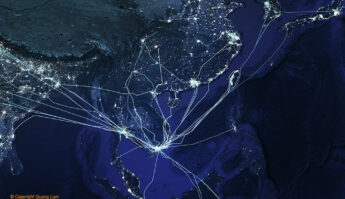
Using the historic silk route to shape his narrative, Quang deLam discusses sericulture, transboundary economics and trade, as well as the ever growing threats in climate change on a global scale. The stories he shares have a strong connection to Vietnam and her history, as much as the present-day geopolitical challenges as faced by this coastal lynchpin in the Indochinese peninsula. Photographs are a direct and straightforward representation of figures and symbols, signifying not race but humanity in multiple incarnations: as natives, as labourers, as believers, as connectors through the world of experience, thought and communicators. Alongside this, in a series of painterly works, Quang deLam describes a genre of ‘graffiti’, spirited gestures marking images of nature (entomology), industrialisation (cartography, shipping) and science (horology and astronomy). Ironically, graffiti is an often misunderstood genre, the practice of which was first incepted to mark a place with presence of the prohibited subaltern. Graffiti is that odd graphic that both affirms and denies its own existence: often appearing in spaces of transit and spaces not convivial with social graces. Graffiti appears under flyover bridges, in large scale storm drains and sewer tunnels, back alleys and often inaccessible pieces of civic architecture such as expressway dividers and sound barriers, to name but a few. Graffiti is traditionally illegal, unlike its modern-day law-abiding counterpart named ‘street art’. The powerful scribbles and use of stencil prints provide an important form of common graphic inundation that permeates contemporary life and mass media. There is an overwhelming sense that overcome with by-lines, brands, formal scripts of identification, our behaviours are largely dictated by conspicuous and insatiable consumption. Given this, any original thought that screens moral conduct is strewn into an unrecognisable black hole, conveying back to us shadows of our true selves.
Quang deLam is interested in creating new mythologies that respond to both our need to survive and our desire to thrive. He sees in artistic production, the satellite to our humours, processing catalytic signals and currents from the world to our sometimes deadened senses and weighted consciousness. If his story begins with the silk route then we reflect upon the pastoralist communities, whose transit with livestock and supplies shaped our productive response to the largesse of the land and the provisions from nature through rain and sunshine, cycles of creation, destruction and reproduction. If his story begins with the demand of luxury silk products across borders, then we reflect upon the silkworm, whose industriousness is subsistent on the cultivation of mulberry forests over centuries; forests that do not simply provide food but stand as fortifications in protection of a fragile climate now on its knees.
In the course of studying the silk route, scholars of varying disciplines have uncovered new knowledge related to the multiple fields of study that continue to belie the this enigma we claim to know so well. The discovery of the Karez well system and the Mogao cave network demonstrate creative innovations mutually informed by the existence of, and the persistence of, the expanding influence of the silk route as a major trading highway. The Karex well system was a unique form of irrigation claimed from the depths of mountain water not naturally and easily obtainable. It sustained a key outpost of Turpan along the nexus of the silk route. Whereas the Mogao caves represented maintenance of a different kind: the cultural library to connect communities through a common belief system and philosophies in Buddhism. Located in Dunhuang, the caves show a concerted effort for travellers to both contribute to and benefit from, a massive and ever evolving archive of Buddhist text and images feeding mind, body and soul. The existence of these two developments highlights the qualitative ingenuity of humankind, seeking as much to extract value and to return value, to the land, to humanity, to posterity.
Quang deLam’s latest project was inspired by the silk route and its unending field of investigation and study. It is simultaneously an observation of the state of the world and humanity. The gravitas that shapes his aesthetic mien is more substantive that this brief essay offers. Like the wells of Turpan and the caves in Dunhuang, it demands a certain curiosity and desire to stake a claim. To acknowledge the agency of human invention and human legacies. For better or worse, our lives are inscribed in the cosmos: gentle vibrations that formulate and reify our existence where wilful ignorance and advancing technology threaten our validations with double edged blades. It would be impossible to say what the future might hold. But through the seas of silk, our journey is fraught with myriad choices. We must be compelled to confront the unthinkable before restoring unimagined realities. Realities that remind us that wherever we are, we hold the keys to open doors to horizons that do not yet exist.
Suggestions for more Painting
Seas of Silk, Mix-Media Exhibition at Lotus Gallery
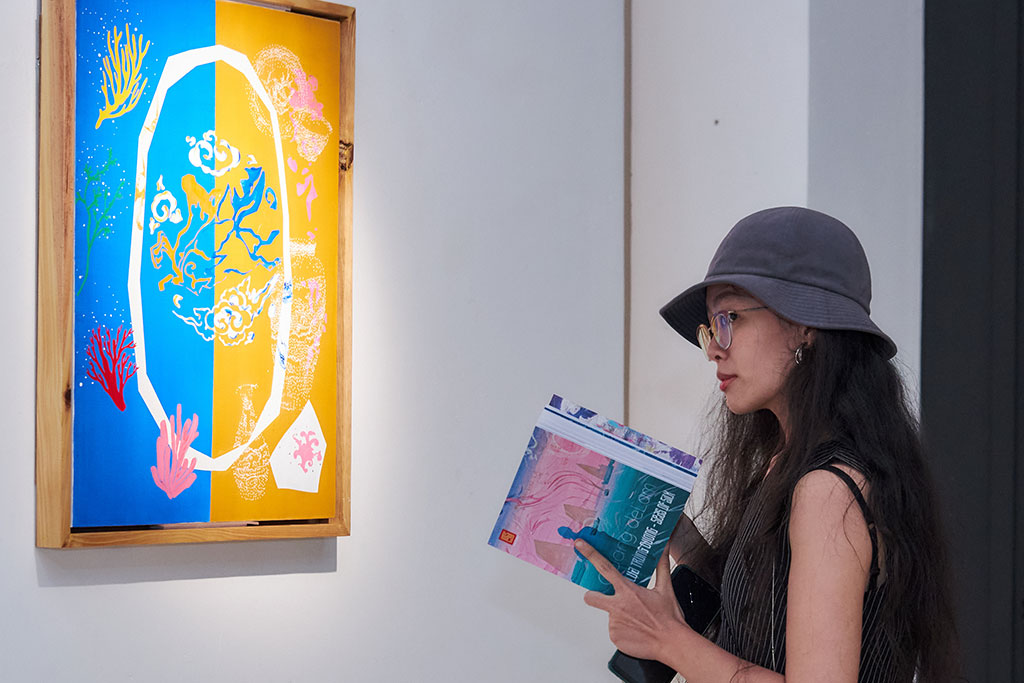
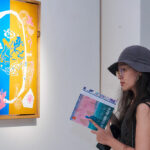
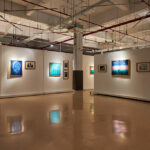
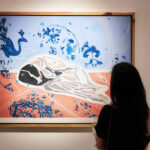
Info : Exhibition “Seas of Silk” at the gallery Lotus (Ho Chi Minh City, Vietnam), from October 3 to October 19, 2025
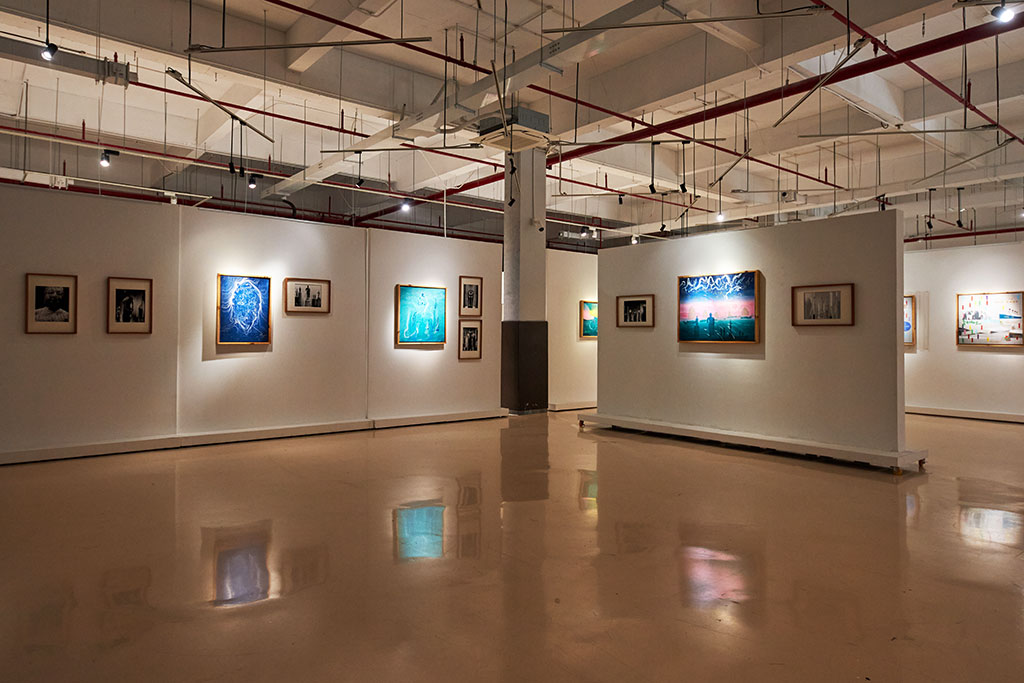
Info : Exhibition “Seas of Silk” at the gallery Lotus (Ho Chi Minh City, Vietnam), from October 3 to October 19, 2025
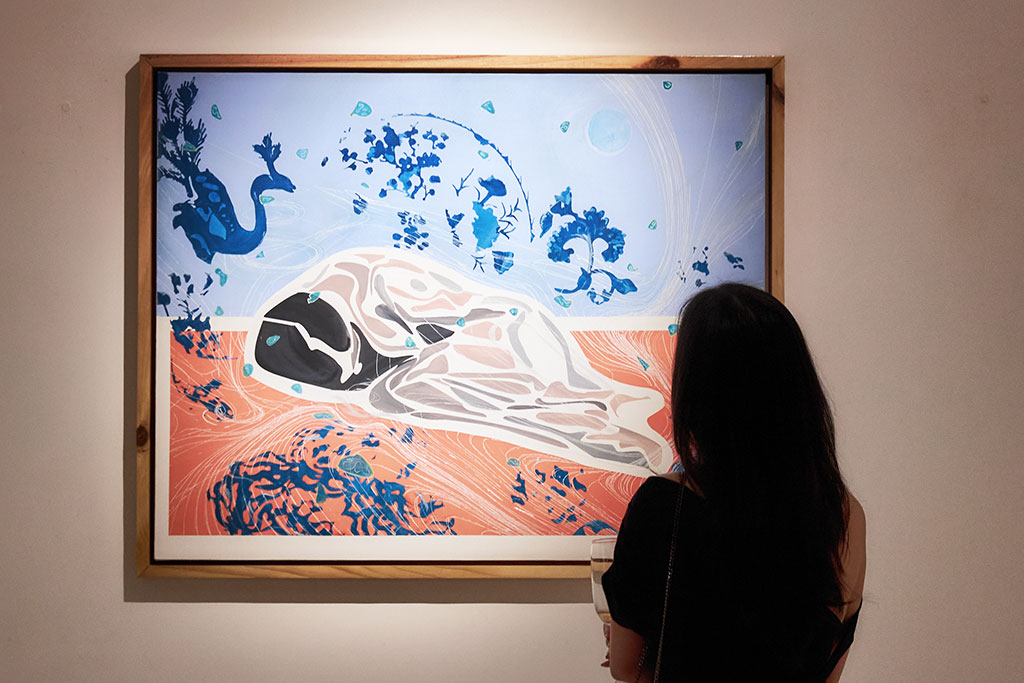
Info : Exhibition “Seas of Silk” at the gallery Lotus (Ho Chi Minh City, Vietnam), from October 3 to October 19, 2025
Suggestions for more Painting
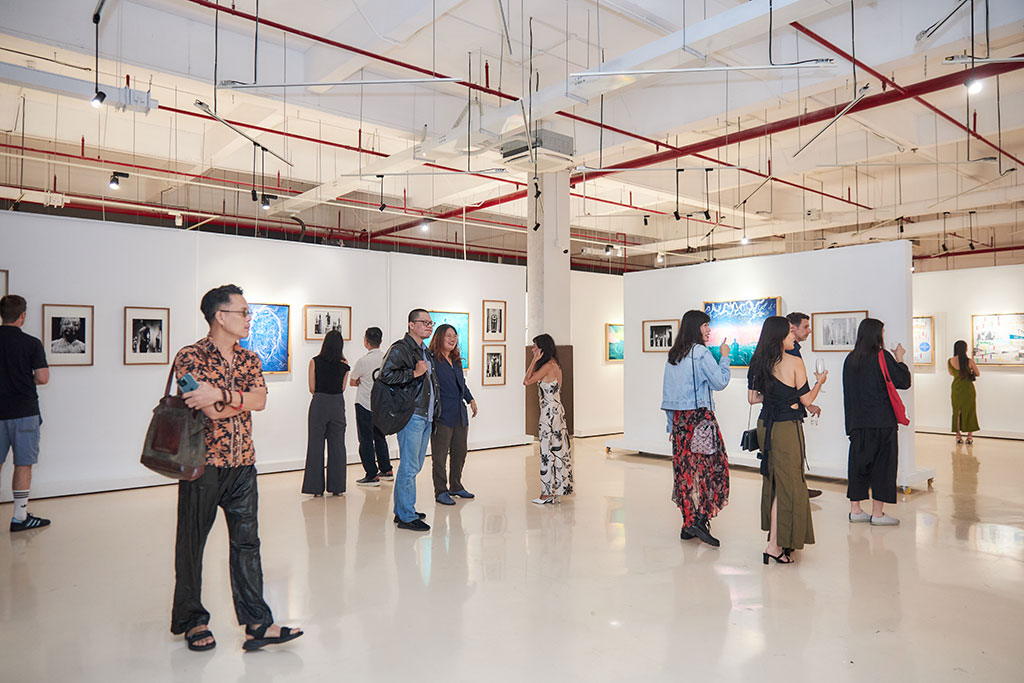
Info : Exhibition “Seas of Silk” at the gallery Lotus (Ho Chi Minh City, Vietnam), from October 3 to October 19, 2025
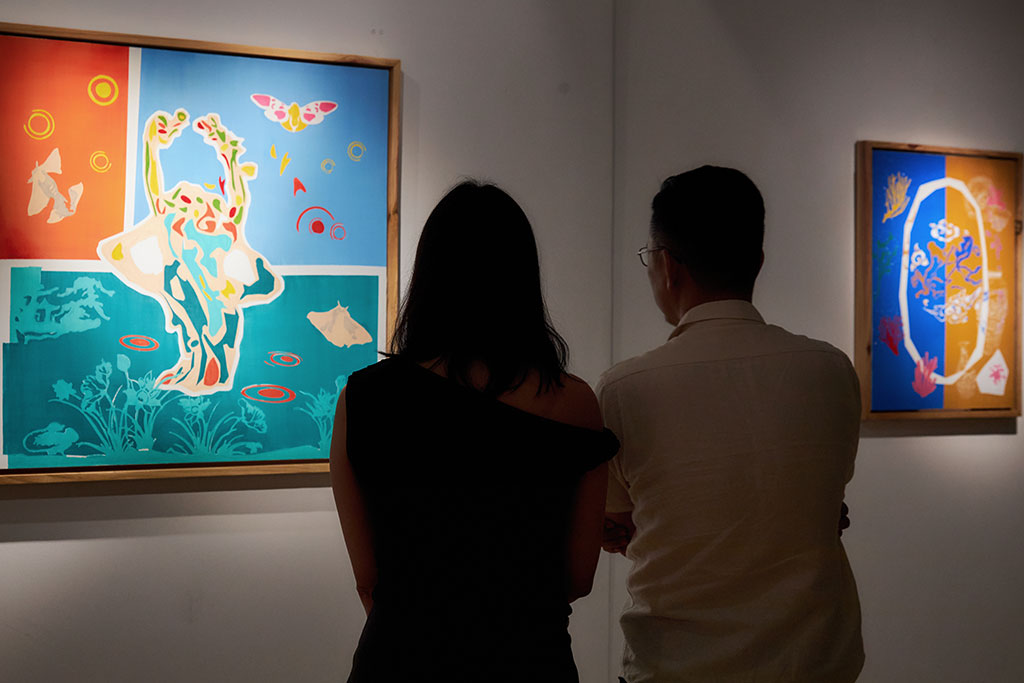
Info : Exhibition “Seas of Silk” at the gallery Lotus (Ho Chi Minh City, Vietnam), from October 3 to October 19, 2025
Suggestions for more Painting
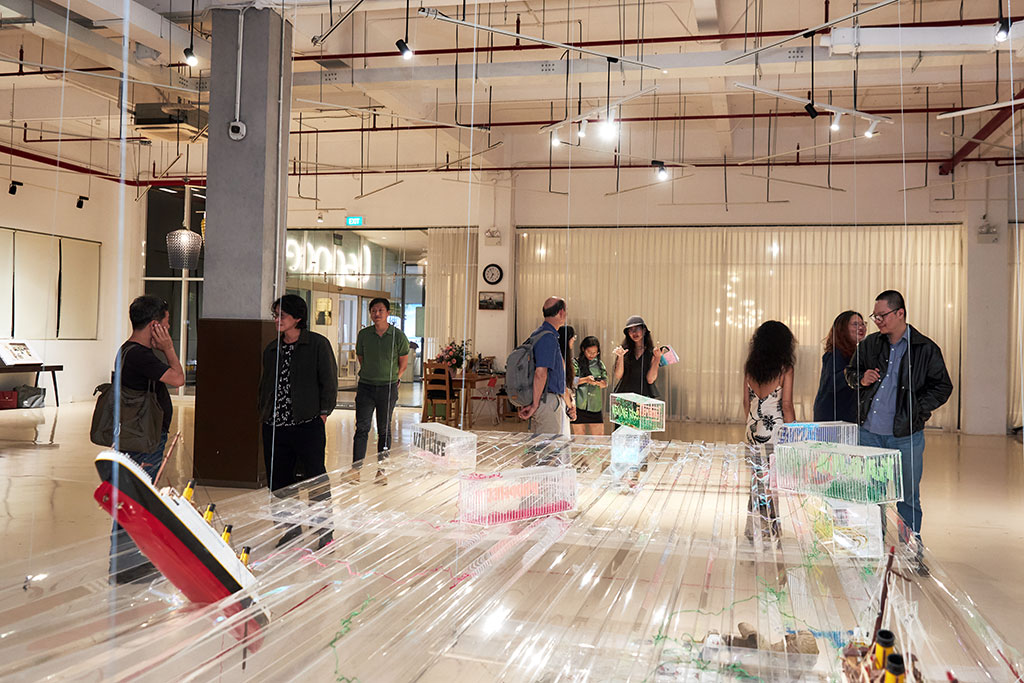
Info : Exhibition “Seas of Silk” at the gallery Lotus (Ho Chi Minh City, Vietnam), from October 3 to October 19, 2025